From Simulations to Storytelling: The Creative Side of HNC Courses
While coursework at the Hopkins-Nanjing Center includes standard assignments such as readings, presentations, exams, and papers, some classes invite students to explore ideas more creatively. This blog features highlights from those innovative learning experiences.
International Water Politics - Role Play Simulations
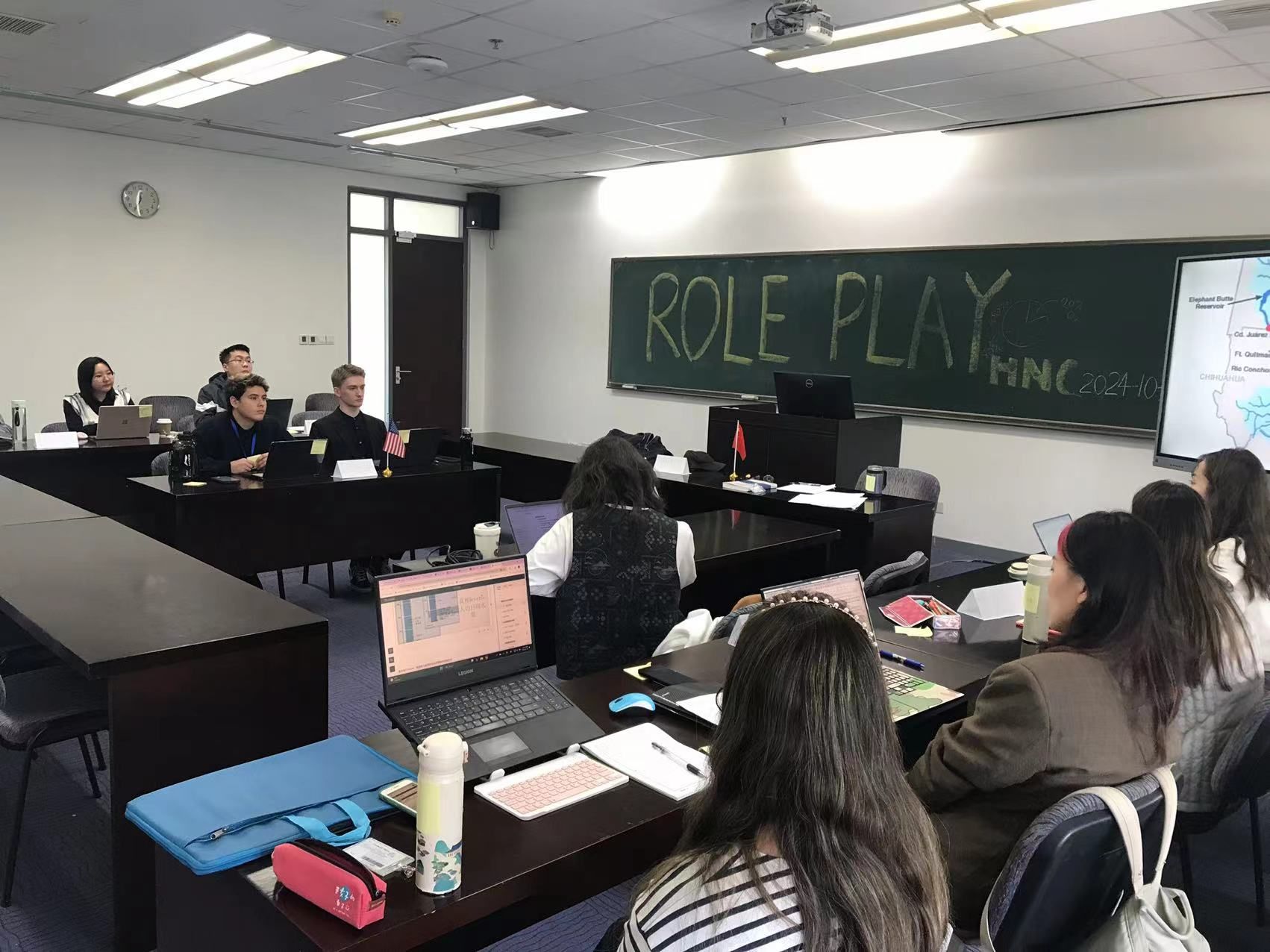
International Water Politics is an Energy, Resources, and Environment course taught by Professor Wang Zhijian in Chinese. The course introduces various academic perspectives regarding current international freshwater politics (such as water security, water war, water politics, water hegemony, water justice, etc.) and explores some typical international river conflict and cooperation cases. Professor Wang takes an unconventional approach in the classroom by requesting international students to read and respond in Chinese, while the Chinese students read and respond in English. This provides a good challenge for anyone practicing their target language.
The course looks at a variety of cases around the globe, with each case having their own dynamics based on the river and state actors involved. One of the most engaging parts of the course is the political role playing simulations. In this type of activity, students pick different sides as representatives of a country to engage in negotiation talks. The first enactment imitated talks between the US and Mexico regarding three different water security situations in the Colorado and Rio Grande river basins. Professor Wang was the moderator, while students took on roles such as diplomat officer, environmental protection advocate, and water irrigation advocate for each respective country.
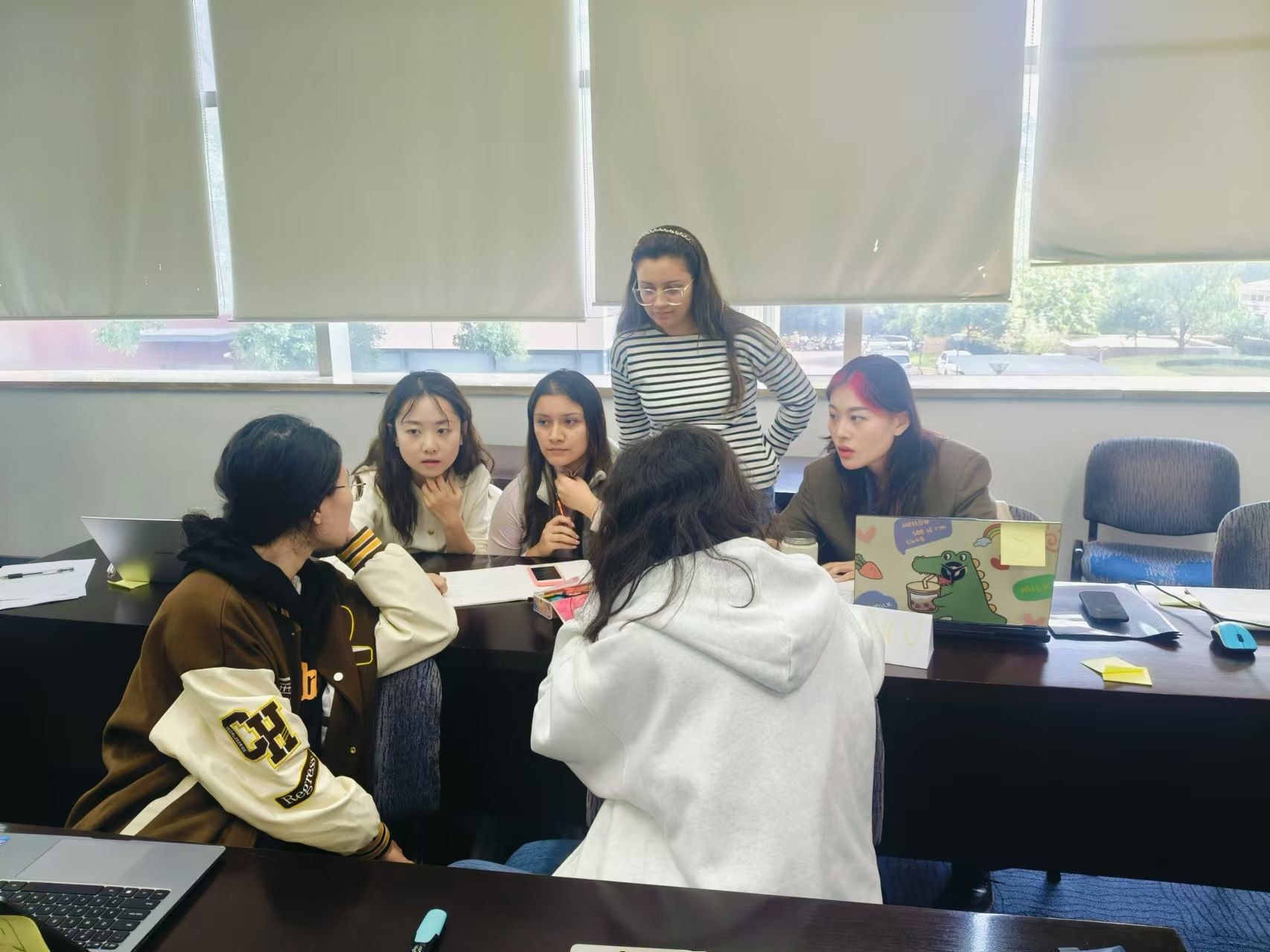
In the second simulation, students acted as representatives of riparian countries China, Myanmar, Laos, Thailand, Cambodia, and Vietnam to negotiate treaty terms for the Mekong River basin. Students had to navigate tensions between lower river states and upper river states, while also taking into account the economies of their representative states, environmental impact, water scarcity, and other factors. After each simulation, Professor Wang would invite students to lunch at the nearby Old Friends restaurant on Jinyin Street (Popular food street adjacent to campus).